It doesn’t take long before victims ask themselves this question: “God, if you are all powerful, all knowing, and present everywhere as I have been taught, where were you when I was hurt? No loving earthly father would allow bad things to happen to one of his children if he was capable of intervening! Why didn’t you prevent this from happening or at least protect me? How can I trust you now?”
It is precisely at this point that victims may struggle with their faith, while bystanders debate about God’s sovereignty and free will. Some assert “God is in control of everything” (thereby making him seem like the author of the evil we endured), while other’s assert, “We have free will,” (thereby making him seem powerless to intervene). Both conclusions have far-reaching implications that can shape our understanding of God’s character. While no one can fully answer all the questions that arise in such theological debates, our understanding affects how we think God relates to us personally, especially after having suffered at the hands of others. Through the years of processing my own trauma, there are several insights that have helped me gain some much-needed perspective.
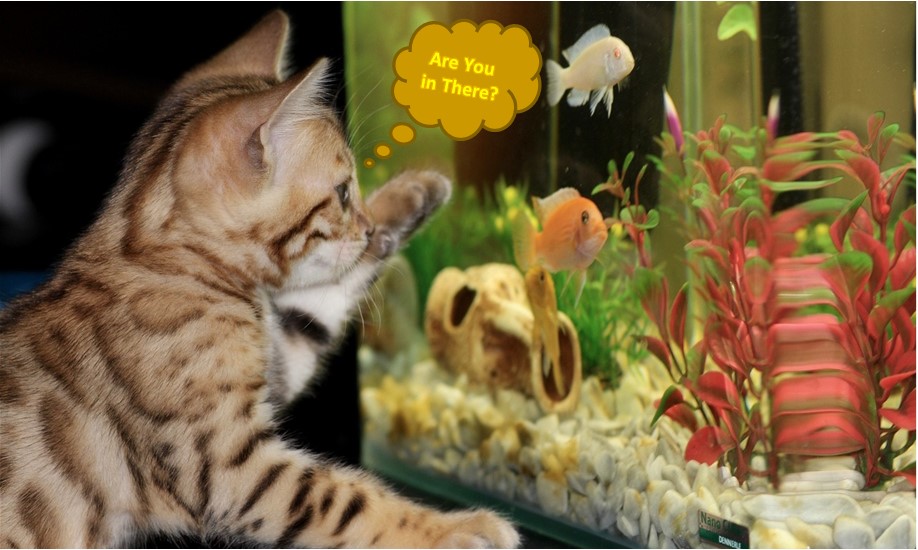
I think the sovereignty of God is best illustrated with an analogy of a fish aquarium. If I own the aquarium, I can pick it up and move it wherever I like. I also clean it and feed the fish daily. However, I do not control the fish’s movement within the tank. The fish are free to swim whichever direction they choose within the confines of that space. They may even choose to prey upon other fish like Zebra fish did in my aquarium as a child. When other fish died, I mourned their loss and removed them from the tank one by one until the day came that we removed the Zebra fish altogether. This analogy has its limitations, but it does illustrate how free will can exist within a controlled environment.
I view the world much like this. I don’t believe God controls our every action or engineers everything that happens to us as he oversees our lives. What I have grown to understand is that God’s love necessitates enough freedom for choices to exist, our own and the choices of others. God did not create us to be his puppets because he desires a genuine relationship with each of us that allows us to return his love or reject it. Yet personal freedom always entails the risk of someone acting in hurtful or destructive ways. Both good and evil are possible, and God is fully aware of what will result from everyone’s choices. Yet, in his infinite wisdom he works whatever happens toward a redemptive end for those who love him (Romans 8:28). God is not the author of evil as many suggest:
“When tempted, no one should say, ‘God is tempting me.’ For God cannot be tempted by evil, nor does he tempt anyone; but each person is tempted when they are dragged away by their own evil desire and enticed. Then, after desire has conceived, it gives birth to sin; and sin, when it is full-grown, gives birth to death.”
James 1:13-15
In addition to being a sovereign creator, scripture also portrays God as being an attentive father. So, how can an attentive parent permit bad things to happen to a child? I was 24 years old when my Daddy died of cancer. I prayed believing God could heal him, yet my Daddy still died. I vividly remember the day I realized death was imminent. I was alone in my office when I received a call from my mom. I cried out to God, and I will never forget his response: “Your best friend, whom you interact with daily, is going on a cruise soon with her husband for two whole weeks. Will you miss her?” “Of course,” I said. “Well then, do you begrudge her this trip?” “No,” I replied, “I want her to go and have a good time. I’ll see her when she gets back.”
Then I heard God whisper, “I’m going to take your Dad on a trip soon too, but he won’t be lost to you forever; you will see him again.” It wasn’t the healing I had longed for, but these words imparted comfort to my troubled heart. Around that same time, I recall reading in Psalm 116:15: “Precious in the sight of the Lord is the death of his faithful servants.” Really God? How could death be precious? Because God’s perspective is so different from mine. My Dad’s passing was homecoming in God’s eyes, not loss. God’s perspective is infinite and eternal, while mine is still quite limited and often blinded by pain.
“For my thoughts are not your thoughts, neither are your ways my ways, declares the Lord. As the heavens are higher that the earth so are my ways higher than your ways and my thoughts than your thoughts.”
Isaiah 55:8-9
Another analogy that has proved helpful to me as I consider the mysteries of divine sovereignty and free will, and their potential impacts upon life’s traumas, is the scenario of a father teaching his son to ride a bike. First. he puts training wheels on the bike and teaches his son to peddle. Eventually, he takes the training wheels off and pushes the bike fast with his son in the driver’s seat. Then, he lets it go! The son either discovers he can balance the bike himself as he joyfully speeds ahead or he falls over, possibly getting hurt in the process. If he falls, the father runs to him, doctors his injuries, and encourages him to get up and try again.
Why did the father let go of the bike? Was it because he didn’t love his son? No, it was because he knows risk is a necessary part of learning to ride a bike. It is an opportunity for his son to become like him so they can ride bikes together in the future. What we often experience as suffering and injustice in this life, God sees as “momentary afflictions’ (II Corinthians 4:7-18) on a pathway to living with eternal values, long after pain is no more.
“Then I saw ‘a new heaven and a new earth,’ for the first heaven and earth had passed away…Look! God’s dwelling place is now among the people, and he will dwell with them…He will wipe every tear from their eyes. There will be no more death or mourning or crying or pain, for the old order of things has passed away.”
Revelation 21:1-4
Of course, all of this can sound like verbal gymnastics until we experience Jesus for ourselves as Immanuel—”God with us”—in the here and now. Where was God when I was being abused? Did he care in that moment? These were the questions I needed to have answered before I experienced God as trustworthy again. It was not enough to simply be told to “have faith” and wait for the sweet by and by.
After all, faith is in a person, and that person’s name is Immanuel. This is the same Jesus—Immanuel—who wept at his friend, Lazarus’s tomb (John 11:35) immediately before raising him from the dead! Jesus cares when we hurt regardless of his own personal awareness of what comes next.
When I was five, I was scalded in the bathtub one evening while my mom was washing my hair. It was an accident, but my little-girl-heart wasn’t sure, which led to some major disconnects between my mom and me. Forty years later during a healing prayer session with a friend, we asked God where he was as I was being scalded? In my spirit, I heard him reply: “I was under running water,” and I was astounded! I expected him to be in another part of the house or watching from the corner of the ceiling maybe, but not “under running water” with me. That meant he felt everything I felt in real time. Later, I also discovered that he was intimately acquainted with the pain of my sexual abuse too. Do you know that Jesus himself was sexually abused upon the cross? In Mark 15:24, they stripped him and bartered for his clothes.
The reality is that God may not always deliver us from pain, but He does promise to always be with us through it.
“Be strong and courageous. Do not be afraid or terrified because of them, for the Lord your God goes with you; he will never leave you nor forsake you.”
Deuteronomy 31:6
Where in your past do you need to experience Jesus as Immanuel—God with you? Let me encourage you to find a private place and pour out your painful memories to him again or ask a friend or counselor to pray with you. Ask him to show you where he was at that time and listen carefully as you quiet your heart before him. His words can provide what you need to grow in trust again.
 Restored Destiny